
Keep your cat safe this winter by avoiding these hazards
It’s a little-known fact that Christmas is a more dangerous time for our pets. Their usual home environment is filled with trees, unusual flowers and other decorations and cupboards are jam-packed with lots of tempting but potentially toxic food and drink.
Here at Vets Now, emergency call volumes increase over the festive season, and it’s often a result of cats swallowing or chewing some of these unfamiliar things. Our handy infographic below gives you the lowdown on what to keep out of your cat’s reach this Christmas – and some interesting statistics that show why.
Click on the image below to read. From here you can also download a printable PDF or embed the infographic on your blog or website.
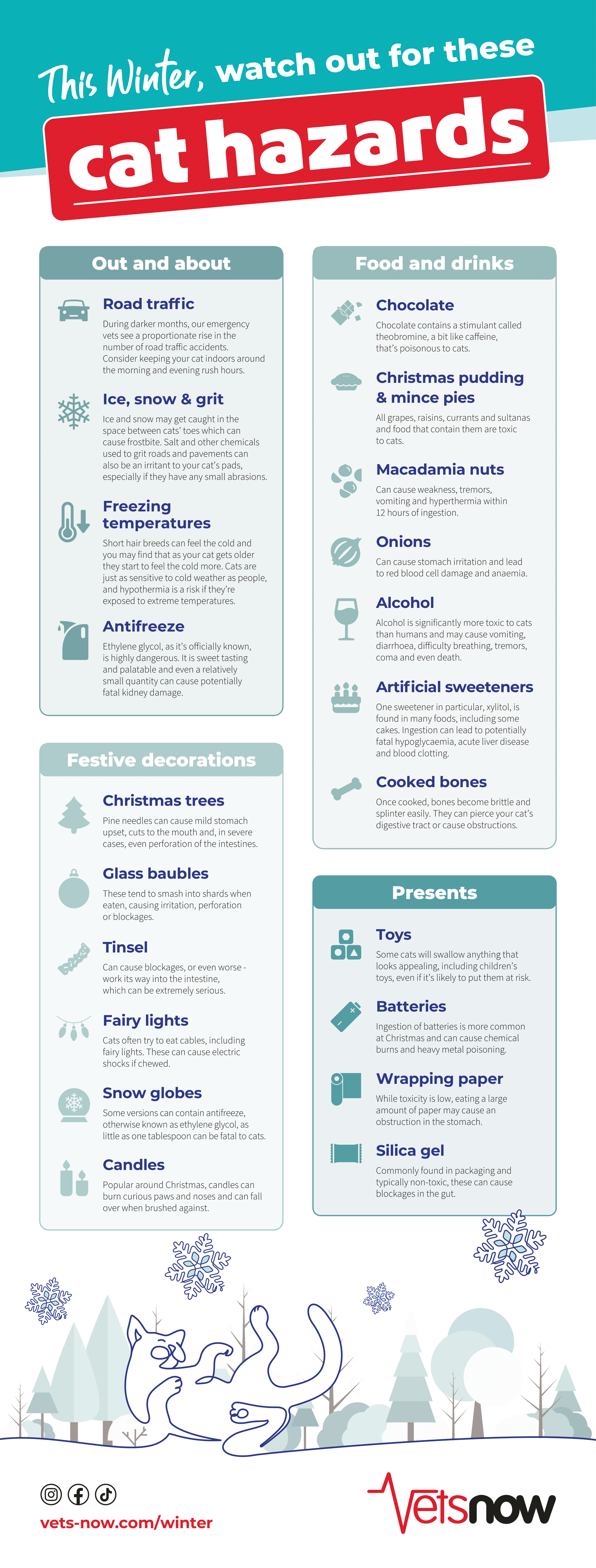
Accessible text version of Winter Hazards for Cats infographic
Winter Hazards for Cats
Winter Cat Hazards – Full Description
Out and About
Road traffic
During darker months, our emergency vets see a proportionate rise in road traffic accidents. Consider keeping your cat indoors around the morning and evening rush hours.
Ice, snow & grit
Ice and snow may get caught between cats’ toes, potentially causing frostbite. Salt and grit chemicals used on pavements can irritate their pads, especially if they have small abrasions.
Freezing temperatures
Short-haired breeds and older cats may feel the cold more. Cats are as sensitive to extreme cold as people, and prolonged exposure can lead to hypothermia.
Antifreeze
Ethylene glycol, commonly found in antifreeze, is highly toxic. Even small amounts can cause fatal kidney damage in cats due to its sweet taste and palatability.
Festive Decorations
Christmas trees
Pine needles may cause mouth cuts, stomach upset, or in severe cases, intestinal perforation if chewed or swallowed.
Glass baubles
Broken baubles can form sharp shards, causing irritation, perforation, or blockages if swallowed.
Tinsel
Tinsel can cause serious internal blockages or work its way into the intestines, requiring urgent veterinary attention.
Fairy lights
Chewed fairy light cables can cause electric shocks. Always place lights out of reach of curious cats.
Snow globes
Some snow globes contain antifreeze (ethylene glycol). As little as one tablespoon can be fatal if ingested by a cat.
Candles
Burning candles are attractive to cats but can burn paws or noses. They also risk being knocked over, causing fire hazards.
Food and Drinks
Chocolate
Chocolate contains theobromine, a caffeine-like stimulant, which is toxic to cats.
Christmas pudding & mince pies
These festive foods contain raisins, sultanas, and currants — all toxic to cats, even in small quantities.
Macadamia nuts
Can cause vomiting, weakness, tremors, and hyperthermia within 12 hours of ingestion.
Onions
Onions may cause stomach upset and can lead to red blood cell damage and anaemia.
Alcohol
More toxic to cats than humans. Can cause vomiting, diarrhoea, tremors, difficulty breathing, coma, or even death.
Artificial sweeteners
Xylitol, found in cakes and other products, can lead to hypoglycaemia, liver failure, and blood clotting issues.
Cooked bones
Cooked bones splinter easily and can pierce or block the digestive tract.
Presents
Toys
Small toy parts or children’s toys may be swallowed and cause internal injury or blockages.
Batteries
Batteries, especially button types, may cause chemical burns or poisoning if swallowed.
Wrapping paper
Swallowing large amounts of paper may block the digestive system, even if not toxic.
Silica gel
Found in packaging, these packets are non-toxic but can block the gut if ingested.
Read and download our winter infographics