
Speak to our team
Do you need help?

Key takeaways
- Cooked bones, corn on the cob, and skewers are common choking and internal injury risks at BBQs.
- Onions, garlic, xylitol, and high-fat foods found in BBQ dishes and condiments are toxic or harmful to dogs.
- Keep your dog secured away from the grill, food, and rubbish, and give them a quiet space to retreat to if they seem stressed.
As we enter the peak barbecue season, it’s natural to enjoy the sunny days with family and friends. However, while BBQs are delightful for us, they can pose numerous risks to our four-legged friends. From ingesting harmful foods to suffering injuries, there are many hazards at barbecues that can affect your dog’s safety.
Before firing up the grill, always check your garden for potential dangers. Curious dogs may investigate dangerous plants or escape through insecure fences, so it’s important to secure the area completely before the barbecue begins. This helps ensure your dog stays safe and avoids any unexpected mishaps.
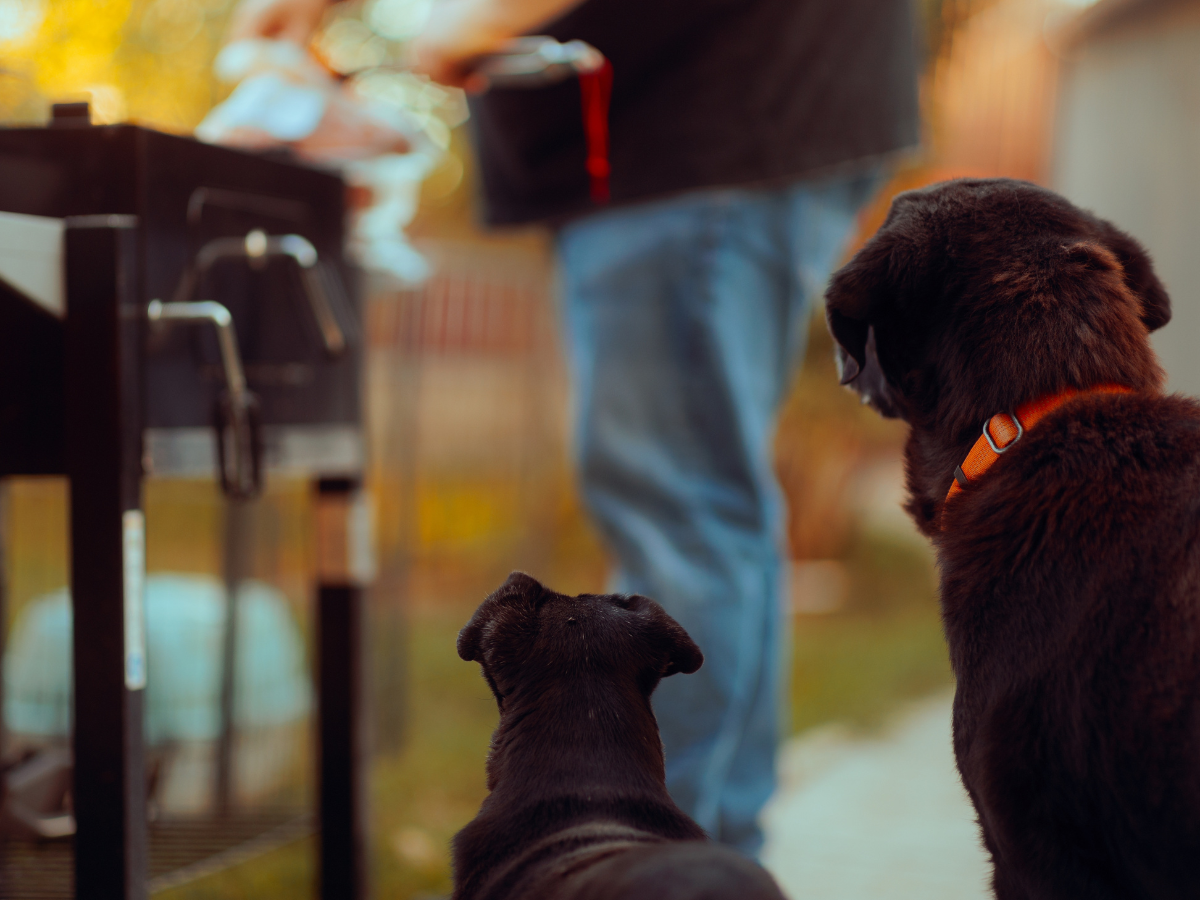
Common BBQ hazards for dogs
Dogs are naturally curious and often can’t resist the tempting smells of a barbecue. This curiosity can lead to various hazards:
- Cooked Bones: Contrary to popular belief, cooked bones, especially from chicken and pork, can splinter easily and cause serious internal injuries if swallowed by dogs, affecting their digestive system and digestive tract.
- Kebab Skewers: These sharp objects can cause severe internal damage if swallowed.
- Alcohol and Toxic Foods: Many BBQ foods and drinks, such as alcohol, can be toxic to dogs.
- Corn on the Cob: Corn on the cob can pose a choking hazard and cause internal blockages if swallowed.
- Barbecue Sauce: Barbecue sauce often contains onion powder, garlic, sugar, and sometimes xylitol, all of which are toxic to dogs.
- Ketchup and Mustard: Ketchup and mustard can be harmful to dogs due to their high levels of salt, sugar, and artificial sweeteners, which can upset a dog’s stomach.
- Onions: Onions, whether raw, cooked, or powdered, are harmful to dogs and can damage their red blood cells, leading to serious health issues.
- High-Fat Meats and Fatty Foods: High-fat meats and fatty foods can cause pancreatitis in dogs and upset your dog’s stomach.
- Grease-Covered Surfaces: Grease-covered surfaces can be harmful if ingested, possibly causing stomach upset.
- Burns: Hot grill surfaces, hot coals, or food can cause painful burns or injuries if a dog investigates with their nose.
Preventing injuries and poisoning
Keep dangerous foods out of reach
Ensure your barbecue area is organised, and all hazardous foods and drinks are kept well out of reach of dogs. Ask guests to follow these rules, particularly when it comes to disposing of bones or leftover skewers.
Secure your BBQ setup
Set clear boundaries around your grill and dining area to prevent your dog from approaching hot surfaces or ingesting dangerous items. Consider using a barrier or lead to keep your dog safe and out of harm’s way.
Create a safe space for your dog
With the hustle and bustle of a BBQ, it can be easy for a dog to become stressed or attempt to escape. Provide a quiet, secure room in your home where your dog can retreat undisturbed. Ensure they don’t become trapped in conservatories or greenhouses, which can become excessively hot.
Dispose of waste properly
Greasy leftovers, aluminium foil, plastic wrap, and any other food-related waste should be disposed of properly to ensure curious noses do not get into trouble. These items can cause blockages or poisoning.
Gardening considerations during BBQ Season
If you’re tidying up your garden for a barbecue, be aware of plants that are toxic to dogs. For instance, laburnum is poisonous, and several other common garden plants pose risks to both dogs and cats, including daffodils, rhododendrons, and yews.
What to do in an emergency
If you suspect that your dog has ingested something harmful or is showing concerning symptoms, contact your vet immediately, or if out of hours, contact your nearest Vets Now emergency clinic.