
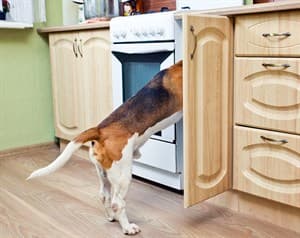
What are the main dangers for pets around the home?
Many pet owners are aware of the most common dangers to pets – such as antifreeze, weed killer and certain types of food. However, there are many other everyday household items that pose just as serious a danger.
If you're worried your pet is sick or injured as a result of any of these, please contact your vet as soon as possible, or find your nearest Vets Now pet emergency clinic or Vets Now 24/7 hospital.

There are a number of common household items which could pose a risk to our pets
1. Household chemicals
Lucky puppy's toilet ordeal
A puppy was lucky to be alive after being accidentally flushed down the toilet. The week-old cocker spaniel, called Dyno, was trapped in a sewage pipe for four hours before being rescued. His owner's son, Daniel, four, of Northolt, Middlesex, put Dyno in the toilet after deciding he needed a wash.
Cleaning products often contain highly toxic chemicals, so it's important to ensure these are kept safely shut away from your pet. Pets also like the smell and taste of antifreeze and windscreen washer so tightly cover containers and wipe up any spills.
2. Electrical cords
Electrocution or burns from electrical cords is a particular risk for puppies and kittens as they tend to chew things more than older dogs, so young pets should always be monitored carefully and exposure to electric cords minimised.
3. Houseplants
Many houseplants, including dieffenbachia, elephant ear and spider plants, are poisonous. Remove them or put them out of reach in hanging baskets. Several outdoor plants, like ivy and oleander, can also be poisonous to pets.
4. Windows and balconies
Screen windows to guard against falls and don't let pets out on balconies.
5. Human medicines
Only ever give your pet medicines that have been prescribed by your vet. Human painkillers such as ibuprofen and paracetamol can be deadly for dogs and cats. Vitamin and mineral supplements are also potentially dangerous so ensure these are kept out of reach.
6. Prescribed pet medicines
If your pet has been prescribed medicine by the vet ensure you follow the instructions on the packaging carefully and if you aren't sure, call your vet to double check. If the medicine has been designed to be palatable, it's important to ensure it's stored away as it may prove to be too tempting.
7. Batteries
If your pet chews and pierces a battery it can cause chemical burns and heavy metal poisoning. This is particularly dangerous if he chews it first and then swallows it. Batteries can also cause an obstruction if swallowed whole. All batteries are potentially toxic so if you suspect your dog has chewed or swallowed one contact your vet.
8. Coins
Coins should be kept away from your pet, particularly pennies as they are made with zinc which is toxic to animals if ingested.
9. Plastic bags
These pose a danger of choking or suffocation so ensure they're kept out of reach.
10. Paper shredders
To reduce the risks posed by shredders, keep the shredder turned off when unattended and only operate it when your pet is not present. Don't ever use a shredder to shred food wrappers and if possible opt for a device with a protective bar or cover to minimise any danger.
11. Carbon monoxide
Just like humans, pets are vulnerable to carbon monoxide poisoning, which is why we should ensure fuel-fired heaters are correctly maintained. This is particularly relevant if your dog sleeps next to the boiler or any other area where carbon monoxide may be present. If you suspect carbon monoxide poisoning, remove your pet to fresh air immediately and contact your vet. Symptoms include drowsiness, lethargy and weakness. You can purchase carbon monoxide detectors in most hardware stores.
12. Washing machines and tumble dryers
Keep washing machine and tumble dryers closed as your pet may climb in and become trapped. Always check before you put a load on.
13. Toilets
Keep toilet lids down to stop your pet falling in – it has been known to happen.
Authors and contributors

Disclaimer
Vets Now assumes no liability for the content of this page. This advice is not a substitute for a proper consultation with a vet and is only intended as a guide. Please contact your local veterinary practice for advice or treatment immediately if you are worried about your pet’s health, even if they are closed, they will always have an out-of-hours service available.