

Fish hook injuries in dogs
Our vets regularly see fish hook injuries in spring and summer in both dogs and cats. Dogs are particularly tempted by shiny lures and tasty bait, with the hook typically becoming embedded in their mouth, food pipe or stomach as a result. There have also been cases of dogs eating discarded fish heads and inadvertently swallowing the fish hook inside of them. Dogs and cats also, occasionally, suffer paw injuries from standing on fish hooks.
If you're worried a fish hook has injured your pet, please contact your vet as soon as possible, or find your nearest Vets Now pet emergency clinic or Vets Now 24/7 hospital.

How can I help my dog injured by a fish hook?
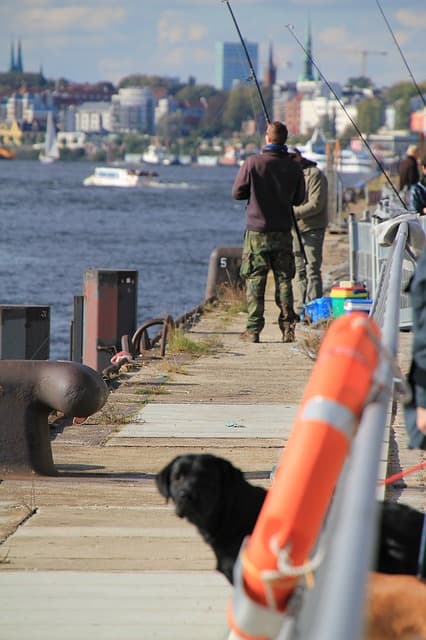
Fish hook hell for dogs
Hundreds of dogs are injured by fish hooks every year.
In January, Hannah Thomas, of Llanelli, issued a warning after her Labrador swallowed a fish hook on a beach.
She said it had caused Millie a lot of pain and called on fishermen to be more careful.
A few months earlier Staffordshire Bull Terrier Jasmine suffered a similar injury after swallowing a fish hook in Canterbury.
Owner Amy Mason rushed her to the emergency vets who said she'd had "a lucky escape".
Due to the barbs on fish hooks, they can be difficult to remove without sedation, minor surgery, and pain medication.
Considerable damage can also be caused if someone pulls on a fishing line after the hook has already become embedded in the animal, so we don't recommend DIY attempts at removing fish hooks.
Never, under any circumstances, pull on a fishing line coming from your pet's mouth and do not cut it either. If the line is long, gather it up and tie it to your pet's collar so it cannot be swallowed.
If the hook is embedded in your dog's paw, cover it up – to prevent further damage to your dog from chewing, licking, or swallowing it – and take your dog to the vet as soon as possible.
Treatment for fish hook injuries
Treatment will depend on where the hook is stuck.
If your dog has swallowed a fish hook, he'll probably be anaesthetised for an X-ray to be taken. Once the location of the hook is known it's likely the vet will attempt to remove it by endoscopy or surgery.
Your dog will probably be given gastro-protectants and antibiotics for a few days to reduce any irritation or ulceration to the oesophagus and stomach as well to control secondary infections.
If the hook is embedded in the skin, it may be possible to remove it with a local anaesthetic. However, sedation will be needed. Once the hook has been removed, it's likely the vet will prescribe antibiotics or pain medication. Tetanus vaccines are not usually necessary for fish hook injuries.
Once your dog is home, you should check the site of injury once or twice a day to make sure there's no sign of infection, such as redness, swelling or a smelly discharge. If you see evidence of an infection, contact your vet.
Calls to anglers to clean up after themselves
Vets have called on anglers to be ultra-careful when discarding fishing tackle and equipment. They say fish hooks can be a potential death trap for small animals, including dogs, cats and swans.
Authors and contributors

Disclaimer
Vets Now assumes no liability for the content of this page. This advice is not a substitute for a proper consultation with a vet and is only intended as a guide. Please contact your local veterinary practice for advice or treatment immediately if you are worried about your pet’s health, even if they are closed, they will always have an out-of-hours service available.