
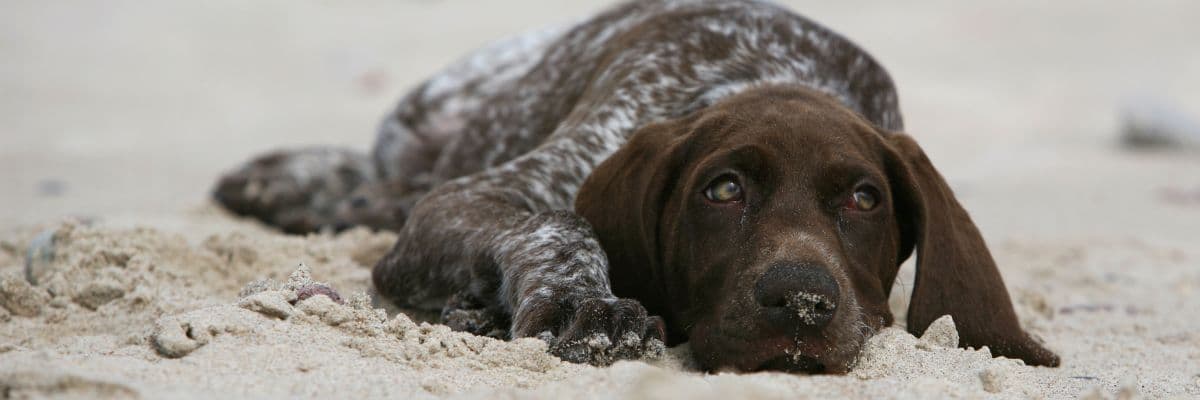
Key takeaways
Sand impaction happens when swallowed sand builds up and blocks the intestines, it's rare but can be fatal if untreated.
Watch for vomiting, lethargy, abdominal pain, dehydration, or restlessness after a beach visit.
Avoid letting your dog dig excessively or play with balls or toys that are covered in sand.
A trip to the beach is one of life's great pleasures for dogs. But sand ingestion is a genuine risk that many owners aren't aware of, and if enough sand is swallowed, it can cause a potentially fatal condition called sand impaction.
Why do dogs eat sand?
Some dogs eat sand deliberately, but most ingest it by accident through digging, repeatedly picking up sandy balls and toys, or on windy days when sand blows directly into their mouths. On particularly windy days, dogs can swallow significant amounts without their owners realising.
What is sand impaction in dogs?
Sand impaction occurs when ingested sand accumulates and causes a blockage in the intestines. Unlike most foreign bodies, sand doesn't pass through easily, it can compact in the digestive tract and require urgent veterinary treatment. While rare, the condition can be fatal.
What are the symptoms of sand impaction?
Signs of intestinal sand impaction include:
Vomiting
Lethargy
Abdominal pain
Dehydration
Restlessness
If your dog becomes uncomfortable, won't settle, or starts vomiting after a beach visit, don't wait to see if it resolves on its own, contact your vet immediately, or if out of hours, contact your nearest Vets Now pet emergency clinic.

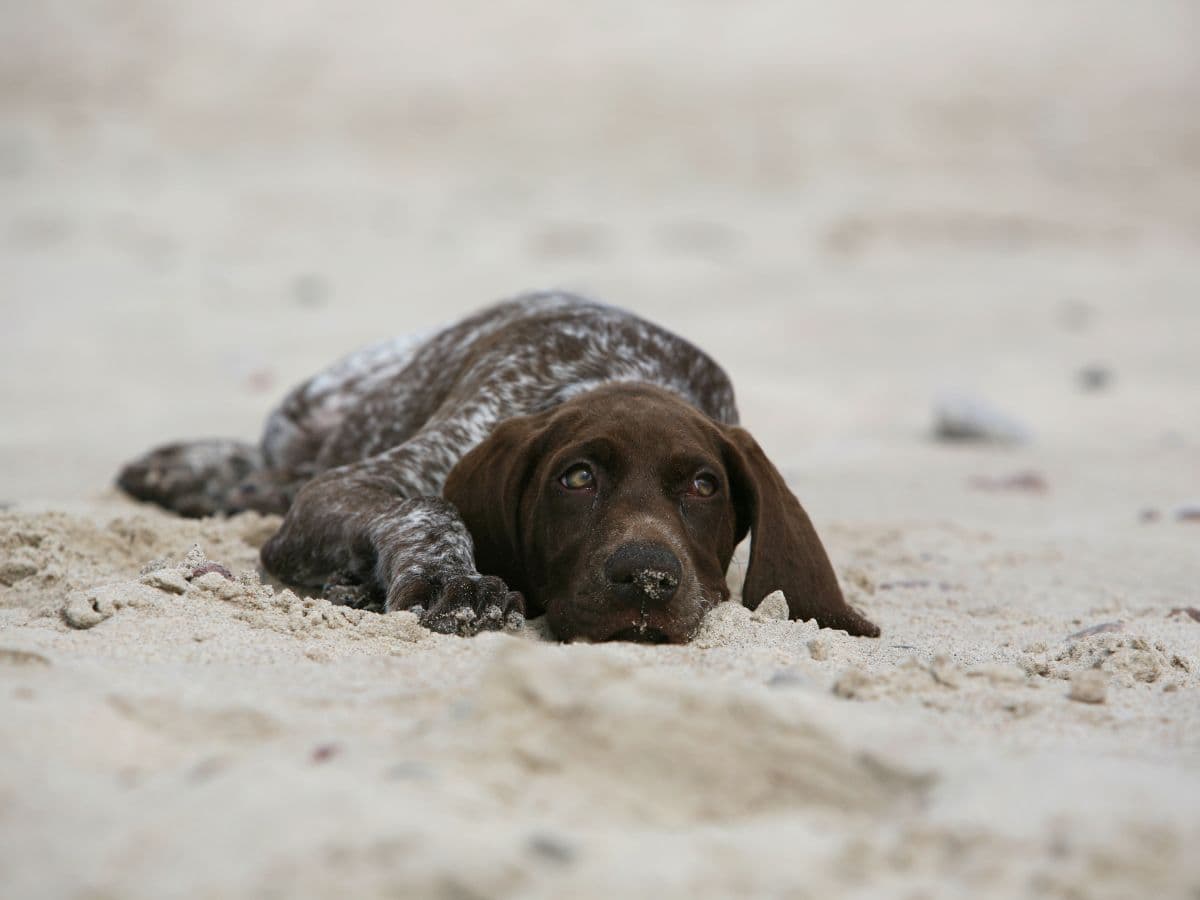
German shorthaired pointer puppy lying on a sandy beach
How is sand impaction diagnosed?
At the clinic, your vet will carry out a full physical examination. If sand impaction is suspected, diagnosis typically involves ultrasonography and X-rays to identify the blockage. A hard or painful area in the abdomen is a key indicator. In some cases, passing sandy diarrhoea after examination can confirm the diagnosis.
How is sand impaction treated?
Treatment includes pain management and intravenous fluids. In many cases, close monitoring and conservative management are sufficient, and surgery can be avoided.
However, some cases do require surgical intervention. The prognosis is good if treatment is initiated early enough, but some dogs have required surgery, and in the most serious cases, the condition can prove fatal. Early intervention is critical.
How can I prevent my dog from eating sand?
The most effective preventive measure is to avoid letting your dog carry sandy balls and toys on the beach, as these can lead to repeated ingestion with each pickup. Always bring fresh water to keep your dog hydrated throughout the day.
Authors and contributors

Disclaimer
Vets Now assumes no liability for the content of this page. This advice is not a substitute for a proper consultation with a vet and is only intended as a guide. Please contact your local veterinary practice for advice or treatment immediately if you are worried about your pet’s health, even if they are closed, they will always have an out-of-hours service available.